

Table of Contents
Why the all so energetic OCDs seem to loose all their energy?
Physiological Distress
Cribbing as you might have already understood is an outcome of thousands of stories that are kept alive in the brain. Due to such massive clusters of temporary memory being managed in the lateral cortex of the brain rather than the cerebellum, an extraordinary amount of energy is used by the brain to keep these stories alive and overthinking, ruminating, planning, scheming, scamming, hating. So the rest of the body is deprived of energy, and slowly, they start feeling tired and fatigued.
Because of excess energy to the midbrain, gut microbiomes are deprived of the energy they need. Furthermore, the gut-brain axis, along with the HPA axis handles stress, and goes down due to microbiome dysbiosis, leaving behind only the HPA axis to handle stress. Thus any small stressors amplify in Cribbers as pathological stress, and they do not seem to get out of the stress, eventually leading to Cortisol deficiency, and adrenaline fatigue.

Because of excessive energy demand to handle the stress, most often either Cribber’s body becomes Catabolic, where the body starts breaking its own muscles and tissues to get the extra energy or slows down the metabolic process completely.
Excess energy transport then leads to inflammation in the organs and the systems, leading to more requirements of water, dehydrating the body. This is then manifested as dry skin, dry mouth, and eventually constipation.
What is Autonomic Neuropathy? Why OCDs have Autonomic Neuropathy?
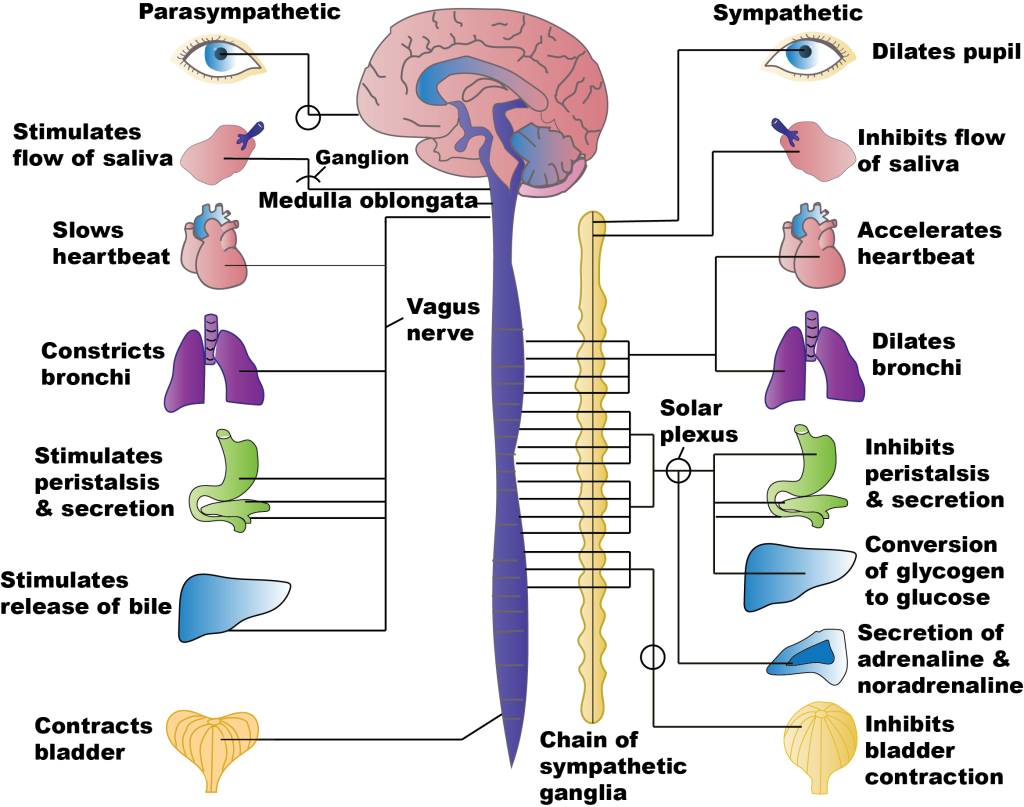
All our major organs are connected through the autonomic nervous system, with two major branches namely the sympathetic nervous system, and the parasympathetic nervous system. Together, they are also called the sympathovagal system. The definition of good health is homeostasis in this nervous system which ensures that all the organs are functioning the way they are expected to function.
Because one of the cores of any form of OCD is excessive stress and the autonomic system handles the stress by more sympathetic activity(called sympathetic dominance), the parasympathetic or the rest and recovery system gets impaired. thus, the image becomes self-explanatory of the symptomatic expression of the disorder.
- Lack of sleep
- Indigestion.
- Lack of sexual desire.
- Hyperurination and frequent urination.
- Dry eyes and impaired vision.
- Insulin resistance.
- Constipation.
- Strain in the eyes.
A Lyfas Case Study of Autonomic Neuropathy of an OCD with Allergy, Sleep Disorder, Constipation, Indigestion
