

Table of Contents
H. Why different people define success in different ways?
Anything that you don’t understand deeply may lead to disasterous decisions in life. Today when you search internet for definitions of success and try to understand success, you will be left more confused than answered. This is because different people see success from different parameters.
Some think not pursuing a goal, and thus not running a rat-race is success. Some think achieving small but achievable goal is success. Some think that achieving something and then never pursuing any goal is success. Some think that they can become satisfied without achieving anything. Some think that achievement itself is satisfaction. Some think that satisfaction itself is an achievement.
Some think that laughing in a joke is happiness. Some think laughing through a comedy is happiness, and because happiness gives satisfaction, watching comedy and laughing a lot is the success. Because learning also gives satisfaction, some think that not achieveing anything but simply learning things(from books and blogs) is the satisfaction.
Some thinks that seeing everyone happy is the satisfaction. Some think making someone else successful will make one successful and satisfied. Some think setting an unrealistic goal and never achiving it, but rather learning from the journey itself is success.
Because most see the life through the prism of their life, often an author remains biased on the definition and explanation of the fundamentals in life. Therefore there are more definitions of success today than the successful lives.
I. Timing, Rules, Plans, Processes
You may be wondering why did we leave these four for the last and why did we not cover them at the beginning? All of these four factors of goals are essential components of execution. If you do not have necessary knowledge, and skills to select a milestone to achieve, then you can not calculate the timeline that is a fair timeline to achieve the goal. You can not also determine the rules, because you can set rules, or play by the rules based on your area of experties and skills. And when you have the timeline and the rules set, you can then create a plan as how you will execute, and a process to execute the plan.
What is a realistic timeline for a goal? How to determine a realistic timeline?
A realistic timeline is average timeline(± 20%) people have taken before you, with your age and skills to achieve the milestone that you are setting target at.
So suppose you want to get a job in any of the multinational companies, and you are 20 years old now, average age of getting an IT job in a multinational company is about 29 years, and so you still have 9 years to achieve your goal. However, if you are already 35, targetting to get an IT job in a multinational will not be the right goal, as you have already crossed the 20% upper limit of the average timeline.
If we have to fix a timeline for the success, then why do people say that there is no right time to target a goal, the best time is now?
Iscon’s founder Prabhupad ji started his mission of spreading Krishna consciousness at the age of 78. There are several instances in the history where one has achieved something way past the average age. One of our M.Tech batch mates, Mrs. Saraswati completed her M.tech at the age of 59, only a year before her retirement.
Even though you can set a target at a goal and pursue that goal at any age, every age has its emotional and existential needs. If all the jobs are vanished in the future and the only way one can live and feed the family is by hunting, then irrespective of the age, one will have to target to become a good hunter.
Such goals are strongly linked to the survival. However, if you pursue the goals just because some day in the past you had dreamt about the goal, then be rest assured that reaching the goal will not bring as much satisfaction in the end life. It will satisfy you at the moment you achieve the goal, but in the context of your overall life, you will often find this pursuit as not a strong pursuit.
Average age of writing the first book is often 36 years. I published my first book at the age of 40, which is 11% higher than the average, but within the acceptable timeline, and so the book satisfied me. However, if had set my goal to publish the book at the age 60, the age where I intend to spend time with my grandkids, telling them stories, the first publication might not have satisfied me as much.
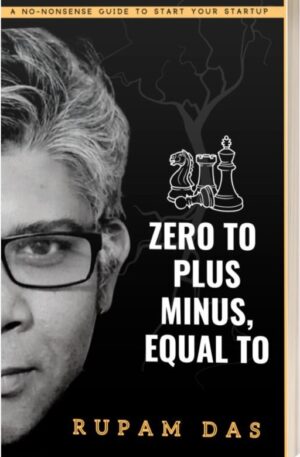


It often takes 4-8 months to write a good book. I completed the Intimacy book in 11 months, whereas the PAIO book in one month and Zero-to-Plus Minus Equal to over a period of 3 years. Therefore the Intimacy book satisfied me the most.
What is Rules in the pursuit of the goal? Why rules play an important role in the life?
You must have heard the cliche “Everything is fair in love and war.” This suggests that the only rule is winning a competition to achieve a goal, and there must not be any rules into the process.
However, we already know that achieving one goal wouldn’t bring any satisfaction to you, and you have to achieve several higher goals to become satisfied with the life to a degree. If you set the rules, brain can follow the same set of rules over and over again for all the future pursuits, because brain can not work in different ways.
So for instance you decide to scavange something, and snatch away someone else’s property, then you set the rule of scavenging. Every time your brain would want to scavange, and you will be only competing against other scavengers.
Just like a soccer game, every pursuit has some rules.
A rule is simply set of behavior that you have to maintain throughout the pursuit. When you break the rules, there will always be a punishment, and when you follow the rules, there will be higher rewards.
For example when you are pursuing the life partner, you may set the rules such as:
- I will become a better human being every day so that my partner meets a better person every day.
- I will become valuable for my partner and take care of some of partner’s needs so that the partner can take care of some of my needs.
- Our relationship will be strongly based on interdependency which we will transform to intimacy.
- I will not lie or try to control my partner.
- I will not manipulate my partner to trick the partner to be with me.
- I will prioritize our relationship daily over other wants.
And so on. When you set the rules and follow the rules, your brain works in a structured way. It knows what to do and what not to do. Therefore the brain doesn’t have to become anxious for every micro-decisions.
However, if your rule is “I will anyways marry my partner and there will be no rules,” your competitors will also follow no rules, and they may come after your profession, life, and even your partner without any rule in place.
What is a plan?
A plan is breakdown of the final goal into smaller goals that you can achieve quickly. This serves two key purposes: Firstly your fundamental need of achieving higher goals are served everyday, at the same time, they also bring you small amount of satisfaction everyday. So, you don’t have to stay unhappy till you achieve the final success.
Because a plan is a small subset of goal, everything that is applicable for the goal is also applicable for a plan. Hence a plan must also have a purpose, rule, process, milestone and timeline. You will also face competition in executing the plans. However, successfully executing one plan after the other in your journey to achieve the goal will keep you excited for the goal.
This is why the rules become such an important aspect of the success. When you set the rules, your brain can follow the same set of rules for each next plan while its pursuing the final goal.
Rules helps you to take advantage of habit brain and reduce overthinking as you know how you will execute the plan even before you start the execution. Because you have already achieved success with past plans, your brain will also have confidence in going for the next plan or goal.
What is process?
If you follow the same set of steps for two or more successive plans in achieving goals, then those set of steps become a process.
A process is simply repeatable sets of actions that you take to execute a plan.
Explaining the process in detail is beyond the scope of this article.