Table of Contents
What Clinical Factors Affect the Clinical Entity of Panic Disorder?
We have learned that panic disorder is a constant fear of panic and unexpected and unpredictable occurrence of panic attacks. Now we at least understand that panic attacks are not unpredictable but rather outcomes of lack of stress exposure, leading to brain overthinking. Don’t we?
So, a panic brain is simply a brain that doesn’t have the confidence to handle stressors. So, the disorder is the lack of belief in the brain that it can handle stress and not panic. Commonly observed factors in patients with panic disorder are the following.
- Heritability (estimated at 43%),
- Presence of nocturnal panics (in 25% of patients),
- Symptoms of autonomic overactivity,
- Behavioral sensitivity to a variety of pharmacologic challenge agents (e.g., caffeine, lactate, CO2, cholecystokinin-4 (CCK-4), yohimbine, and m-chlorophenylpiperazine), and robust response to pharmacotherapies that enhance brain serotonin (5-HT), norepinephrine (NE), and γ-amino-butyric (GABA) neurotransmission.
What is the Neuroscience of Stress and Panic?
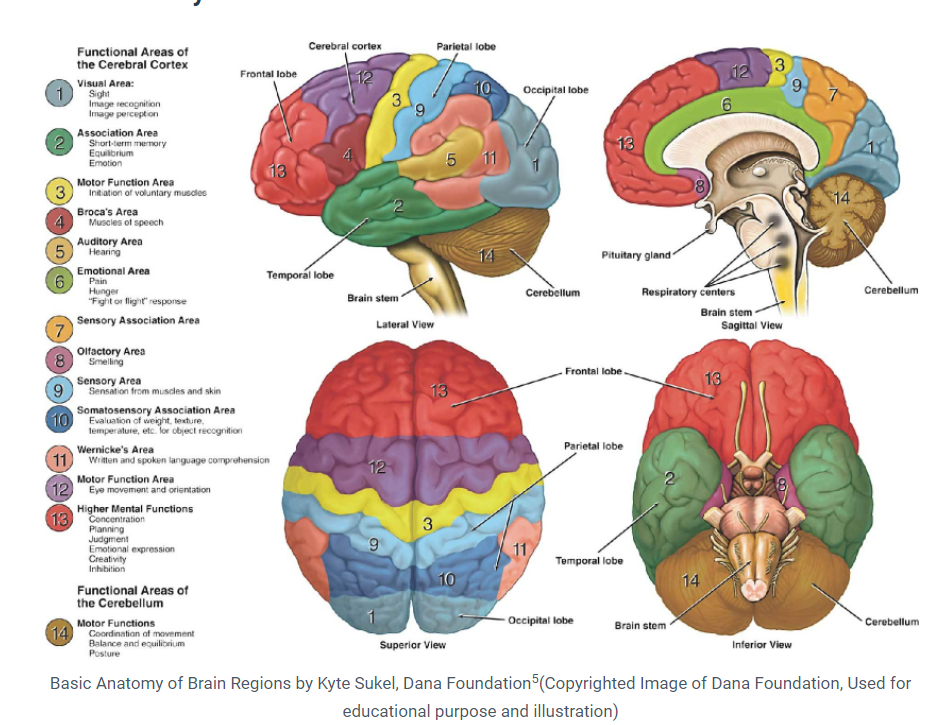
Beneath 6,8 in the above image is our Limbic System. The Limbic brain is also known as the lizard brain, which was a brain that got developed first in evolutionary terms.


What is the role of the Amygdala in Panic?
The amygdala part of our brain is responsible for our fear or panic response. We already know that panic is the brain’s response to unpredictable and repetitive stress. The amygdala is responsible for expressing fear and aggression as well as species-specific defensive behavior, and it plays a role in forming and retrieving emotional and fear-related memories.
Why more exposure to stress reduces panic? How HPA axis handle stress?
Generally, whenever we are under stress(financial, relationship, physical, some disease), the Hypothalamus section of the brain handles the stress in conjunction with the pituitary gland and adrenal gland located on the top of our kidney, as shown in figure-4.

Whenever there is stress, our body needs to overwork, it needs more energy, the cells are to have more Oxygen; therefore, our blood pressure, breathing rate, heart rate, metabolic rate all increase. The limbic system’s Hippocampus encodes our memory and searches for an answer to a situation in the memory. So, the more one is exposed to the stressors; the more solutions are stored in the brain about the stressors. Then HPA axis replicates the past experiences, and the brain doesn’t react.
So, properly handling stressful situations needs the following primary things the brain and the body.
- More and more memory regarding the past stressful situation and the brain’s way of overcoming them (or unsuccessfully)
- Proper functioning of the memory.
- Proper functioning of our thyroid system(pituitary gland)
- Our body’s ability to produce enough cortisol, and
- Proper functioning of our stress response system.
Hi Rupam da,
This is a great article packed with valuable information.
If someone is suffering from memory functioning not properly and that in turn causes panic, is that something curable? E.g., in a sudden actionable situation his/her memory doesn’t trigger in time to resolve the situation, and instead panic occurs. So, no action is taken and a disastrous situation is imminent, in turn, that causes more panic.
Dear Subhajit, thanks for your comment and for posting the query.
1. Panic is a reaction of the brain. Brain panics when it considers a situation threatful.
2. In my case, I am severely dyslexic. I can’t make sense of spellings, and because of severe brain information overload, often tend to forget small things when I try to remember them. It happens all the time.
3. When I forget and fail to recollect information, it becomes frustrating sometimes, and such frustration may irritate me.
4. Such forgetfulness is limited to forgetting memory and may result in carelessness and diversion of focus from our actions. For instance, over the past few weeks, several times, I have forgotten to turn off the gas after making tea, resulting in burning the utensil.
5. Such incidents resulted in kind of fear and over-alertness whenever I went near the stove.
So, I can completely understand and comprehend your question. Here is how I have dealt with the situation.
i) When such forgetfulness occurs, note down the incidents.
ii) This convinces the brain that you are not worried or frustrated about the situation but taking them as an opportunity to learn why they are happening.
iii) When you are not occupied, open the notes of all the situations and think deeply from the last evening of the day of the event till the evening of the day of the event about every incident.
iv) You will invariably notice that the forgetfulness is a result of poor sleep, relationship conflict, someone triggering you already in the last two days, or suppressed anger.
v) Now, when you correlate multiple such incidents, you will see similar patterns.
vi) Write down this pattern as “Cause of Forgetfulness.”
vii) Next time a similar event happens, just open your notes of the causation section and check if the events and patterns are the same as what you have discovered.
viii) After pattern matching, you will see that you are no more panicking. Now your brain will device strategies to overcome or avoid those patterns.
Final Thought:-
Panic is a phenomenon of the afraid subconscious brain. Whenever panic situations are appearing in life, bring them into your conscious brain and analyze them. Helps you overcome panic attacks.